Understanding Deflationary Models: How Buyback & Burn Supports Crypto Ecosystems
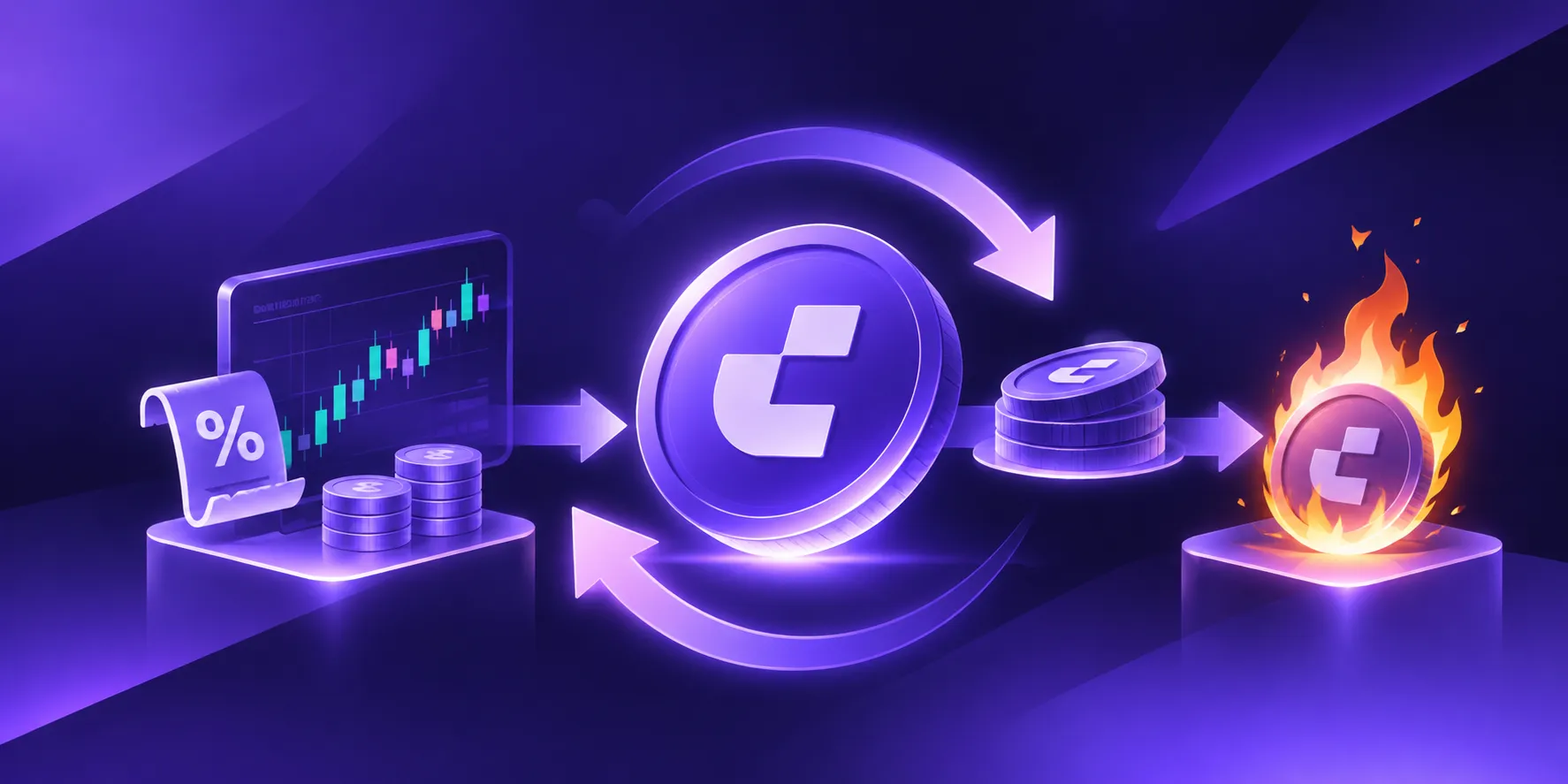
Understanding Deflationary Models: How Platform Buyback & Burn Empowers Long-Term Ecosystems
Deflationary token models have become an important part of cryptocurrency ecosystem design. By combining limited token issuance, market-based repurchases, and permanent token burns, blockchain platforms can create mechanisms that connect business activity with long-term token supply management.
One example is CoinW Coin (CWC), the utility token powering the CoinW ecosystem. Its economic framework combines platform trading fee revenue, periodic token buybacks, and a 20% permanent-burn allocation for repurchased tokens. Together with trading benefits, subscription services, and AI-powered utilities, these mechanisms are designed to encourage ecosystem participation and support long-term sustainability.
According to the official CWC introduction, the model is intended to connect token utility with platform development while introducing a transparent process for reducing token supply.
Quick Summary
Deflationary tokenomics: A supply-management approach in which tokens can be permanently removed from circulation through burning.
CWC total issuance: 200 million tokens, with no additional issuance under the announced model.
Revenue-linked buybacks: CoinW identifies a portion of platform trading fee revenue as a funding source for periodic secondary-market CWC purchases.
20% permanent-burn allocation: The published framework assigns 20% of repurchased CWC to permanent burning, subject to execution arrangements.
Ecosystem development: Other allocations support node rewards, asset acquisition, user incentives, and an investor protection fund.
Transparency: CoinW describes public burn addresses, transaction hashes, and quarterly reporting to support independent verification.
Important limitation: Token burns reduce supply when completed, but do not guarantee higher prices, liquidity, or investment returns.
What Is a Deflationary Token Model?
A deflationary token model is a cryptocurrency supply framework designed to reduce the number of available tokens over time. Unlike inflationary models that introduce additional tokens through ongoing issuance, deflationary mechanisms can permanently remove existing tokens from supply.
Token burning is one of the most widely recognized methods. A burn typically involves transferring tokens to an address from which they cannot be recovered or spent. Once the operation is completed and verified, those tokens are permanently excluded from usable supply.
However, a token does not automatically become more valuable simply because its supply decreases. Market prices depend on the relationship between supply and demand, as well as liquidity, adoption, investor sentiment, and broader economic conditions.
Deflationary vs. Inflationary Tokenomics
| Feature | Inflationary Model | Deflationary Model |
|---|---|---|
| Supply direction | Additional tokens may enter supply | Tokens may be permanently removed |
| Typical mechanism | Issuance, mining, or staking rewards | Token burns or buyback-and-burn programs |
| Primary objective | Support network incentives and distribution | Manage supply and token scarcity |
| Potential challenge | Supply dilution | Insufficient demand or limited utility |
| Price impact | Not predetermined | Not predetermined |
Both models can serve legitimate purposes. The effectiveness of either approach depends on whether its incentives, supply policies, and practical token applications are aligned with the ecosystem's development.
For additional market context, users can monitor crypto live prices and compare the performance of major assets such as Bitcoin (BTC) and Ethereum (ETH).
How Do Platform Buyback and Burn Mechanisms Work?
A buyback-and-burn mechanism connects an ecosystem's financial activity with token supply management. Rather than relying exclusively on market participants to purchase tokens, a platform may allocate part of its business-generated revenue toward buying back its native asset.
The purchased tokens can then be distributed among ecosystem programs, reserved for future use, or permanently destroyed according to the platform's published framework.
Step 1: Platform Activity Generates Trading Fee Revenue
Cryptocurrency exchanges generate trading fee revenue when users execute eligible transactions. Trading activity across spot and derivatives markets can contribute to the platform's overall business performance.
Under CoinW's CWC framework, a portion of platform trading fee revenue is identified as a funding source for token buybacks. This creates an economic connection between exchange activity and potential secondary-market purchases of CWC.
Importantly, this arrangement is not a direct revenue-sharing entitlement for token holders. CWC does not represent company equity or an automatic right to receive dividends or trading fee distributions.
Step 2: The Platform Repurchases Tokens
CoinW's published framework describes periodic CWC purchases from the secondary market. The platform uses algorithmic order splitting and phased execution to help limit the market impact of individual buyback operations.
Buybacks are conducted without a fixed public schedule, an approach intended to reduce predictable trading behavior and opportunities for market front-running.
The amount and timing of purchases remain subject to platform decisions, business requirements, market conditions, compliance obligations, and risk management considerations.
Step 3: Repurchased Tokens Are Allocated
After repurchase, CWC can be assigned to different ecosystem purposes. CoinW's published allocation framework includes permanent burns alongside programs intended to support participation, incentives, and ecosystem development.
This distinction matters because buying back a token does not automatically mean burning it. Repurchased tokens remain part of the token supply unless they are permanently destroyed.
Step 4: Designated Tokens Are Permanently Burned
Tokens allocated for burning may be consolidated and transferred to a publicly disclosed burn address. Once the transfer is completed, the corresponding transaction hash can provide blockchain evidence of the operation.
Permanent burning reduces the usable token supply by the number of tokens destroyed. It does not, however, establish a guaranteed market price or prevent subsequent price declines.
How Does CoinW's CWC Buyback and Burn Model Work?
CoinW Coin (CWC) is the upgraded utility token of the CoinW ecosystem. The platform announced the upgrade in July 2026 as part of its development toward an AI-driven crypto super app.
CWC has an announced total issuance of 200,000,000 tokens, with a supply-management framework incorporating utility-driven demand, token lock-ups, periodic buybacks, and permanent burns.
Readers seeking the complete issuance and vesting structure can consult CoinW Academy's CWC Tokenomics: 200 Million Supply, Allocation, Vesting & Burns.
Transaction Fee Revenue as a Buyback Funding Source
The CWC framework identifies a portion of trading fee revenue as a source of funds for secondary-market token purchases. This is intended to establish a connection between platform business activity and token demand generated through buybacks.
CoinW's earlier platform-token upgrade announcement also described allocating a portion of quarterly net profits toward buybacks and burns. These statements describe funding arrangements at different levels and should not be interpreted as a guaranteed fixed percentage of revenue.
In principle, increased platform activity may expand the financial resources available for buybacks. Actual purchase amounts remain dependent on the platform's decisions and applicable conditions.
The 20% Permanent-Burn Allocation
A defining feature of CWC's published deflationary framework is the allocation of 20% of repurchased tokens to permanent burning.
This percentage refers to the allocation of tokens acquired through the buyback program. It does not mean that CoinW burns 20% of all trading fee revenue, nor does it mean that 20% of the original CWC supply is automatically destroyed.
The official framework identifies five allocation categories:
| Allocation Category | Share | Intended Purpose |
|---|---|---|
| Permanent Token Burn | 20% | Permanent removal of designated CWC from circulation |
| Ecosystem Node Rewards | 20% | Potential staking rewards for ecosystem nodes |
| Asset Package Acquisition | 20% | Acquisition of major cryptocurrency assets |
| 10 Billion Incentive Fund | 20% | User incentives and token purchase subsidies |
| Investor Protection Fund | 20% | Resources intended for extreme market conditions |
These allocations are intended to balance permanent supply reduction with broader ecosystem development. They do not represent guaranteed distributions to holders, and the investor protection allocation should not be interpreted as an unconditional compensation or principal-protection commitment.
Example: What Happens When CoinW Buys Back 1 Million CWC?
Consider a hypothetical scenario in which CoinW purchases 1,000,000 CWC from the secondary market and applies the published allocation ratios in full.
200,000 CWC: Allocated for permanent burning.
200,000 CWC: Allocated to ecosystem node rewards.
200,000 CWC: Allocated to asset package acquisition.
200,000 CWC: Allocated to the incentive fund.
200,000 CWC: Allocated to the investor protection fund.
In this illustrative example, 200,000 CWC would be designated for destruction. Only after those tokens were actually burned could they be counted as permanently removed from supply.
The example is explanatory rather than a record of an actual buyback, and it does not establish a guaranteed future purchase or burn amount.
Why Can Buyback and Burn Mechanisms Benefit Long-Term Ecosystems?
The potential benefits of a deflationary model extend beyond reducing the number of tokens. When combined with meaningful utility and transparent execution, buyback-and-burn programs can help align ecosystem activity with longer-term token economics.
1. Connecting Platform Activity With Token Economics
A revenue-funded buyback mechanism creates a potential relationship between business activity and demand for the platform's native token.
For CWC, the relationship begins with trading fee revenue and extends to discretionary secondary-market purchases. This approach gives platform activity a role in the token's economic framework without granting holders direct ownership of that revenue.
2. Introducing a Permanent Supply-Reduction Mechanism
Permanent burns distinguish deflationary tokenomics from models based exclusively on temporary lock-ups or restricted token transfers.
Once tokens are irreversibly burned, they cannot return to circulation. Over time, repeated completed burns can reduce the remaining supply relative to the original issuance.
Nevertheless, the resulting market impact depends on demand, liquidity, future token unlocks, and other market factors.
3. Supporting Ecosystem Incentives
Burning every repurchased token is not the only possible strategy. Platforms may also allocate resources to activities that encourage adoption and participation.
CWC's framework includes node rewards, incentive programs, and other ecosystem allocations alongside permanent burning. These programs are intended to support the platform's development while maintaining a separate supply-reduction component.
4. Encouraging Transparency and Accountability
Publicly disclosed token burns allow users to distinguish between announced intentions and completed operations.
CoinW describes publishing buyback information, burn transaction hashes, and quarterly reports. These disclosures can help users evaluate whether the announced framework is being implemented as described.
How Does Token Utility Strengthen a Deflationary Ecosystem?
Supply reduction alone cannot sustain a token ecosystem. Long-term relevance also depends on whether users have practical reasons to acquire, hold, or spend the token.
CoinW's CWC model combines its deflationary framework with platform utilities designed to serve different types of users.
Trading Fee Discounts and VIP Benefits
According to CoinW's official CWC introduction, eligible users can pay spot trading fees with CWC to receive a 20% discount. CWC holdings can also contribute toward VIP upgrade requirements by offsetting up to 50% of the required trading volume under the applicable rules.
These benefits provide practical use cases connected to the exchange's core trading services.
Subscriptions and Token Lock-Ups
CWC also supports subscription-based benefits and selected premium services. The announced framework includes predefined lock-up periods associated with subscription activities.
Lock-ups may temporarily restrict token availability, but they should not be confused with permanent burns. Locked tokens remain part of the issued supply and may become available again according to their respective conditions.
AI-Powered Services and Agentic Trading
CoinW positions CWC as an access and utility token within its developing AI service ecosystem. Planned and supported applications include AI Agent operations, API usage, data services, and strategy subscriptions.
These applications are intended to connect token usage with access to digital services. Availability, eligibility, pricing, and functionality may differ between products and development stages.
For a broader explanation of these applications, read What Is CWC? CoinW Token Benefits & Tokenomics.
How Can Buybacks, Burns, and Utility Create an Ecosystem Growth Cycle?
The combination of token utility and supply management can be understood as a potential ecosystem growth cycle.
Platform adoption: Users participate in trading, subscription services, and other ecosystem activities.
Business activity: Eligible platform transactions generate trading fee revenue.
Token buybacks: CoinW may allocate part of its trading fee revenue toward secondary-market CWC purchases.
Supply management: The published allocation framework designates a portion of repurchased tokens for permanent burning.
Ecosystem development: Other allocations can support incentives, participation, and related programs.
Continued utility: Trading benefits, subscriptions, and AI services may create further reasons to use CWC.
This cycle illustrates the intended relationship between ecosystem activity, token utility, and supply management. It is not a self-sustaining guarantee: weaker adoption, reduced trading revenue, market volatility, or changes to platform policies can affect its operation.
How Does CoinW Make CWC Buybacks and Burns Transparent?
Transparency is especially important when a platform controls the timing and execution of token repurchases.
CoinW's official CWC framework describes several disclosure measures intended to make buyback and burn activity independently verifiable.
Buyback disclosures: Publication of purchase amounts, average execution prices, and transaction hashes after buyback operations.
Public burn address: A designated address intended to make completed token burns identifiable.
On-chain verification: Publication of burn transaction hashes so community members can inspect completed transfers.
Quarterly reporting: A stated commitment to publish periodic buyback and burn reports.
Community oversight: Opportunities for users to independently monitor disclosed operations.
These measures are described in the CWC Buyback, Burn, and Transparency framework.
Users evaluating the mechanism should distinguish published commitments from completed transactions and verify actual burns using the relevant blockchain records.
What Are the Risks and Limitations of Deflationary Models?
Although deflationary tokenomics can introduce useful supply-management mechanisms, they also involve limitations that should be understood before evaluating any ecosystem token.
No guaranteed price appreciation: A smaller token supply does not automatically create greater market demand or a higher price.
Discretionary execution: Buyback timing and amounts may change according to platform policies, business conditions, and regulatory requirements.
Revenue dependence: Lower platform activity may reduce the resources available for potential repurchases.
Token unlocks: Previously allocated tokens entering circulation can affect liquid supply even while separate burns reduce total supply.
Market volatility: Cryptocurrency prices can fluctuate significantly regardless of token supply policies.
Utility adoption: Token demand depends partly on whether users find ecosystem benefits sufficiently useful.
Execution and transparency: Announced allocations should not be counted as completed burns until the relevant transactions have been executed and verified.
CoinW explicitly states that CWC buyback, burn, subsidy, and ecosystem allocation arrangements do not constitute guarantees of token prices, liquidity, returns, or principal protection.
What Is the Long-Term Outlook for CWC's Deflationary Model?
The long-term effectiveness of CWC's tokenomics will depend on the interaction between platform development, token utility, market participation, and the execution of its announced supply-management framework.
Its fixed issuance of 200 million tokens establishes the original supply ceiling, while periodic buybacks and permanent burns introduce a mechanism through which that supply may decrease.
At the same time, trading discounts, VIP privileges, subscriptions, and AI-related applications are intended to create practical reasons for users to interact with CWC.
The most meaningful indicators of the model's development will include actual buyback volumes, verified burn amounts, circulating supply changes, platform adoption, and the use of CWC across supported services.
Rather than treating deflation as an automatic investment benefit, users should evaluate whether token utility, transparent execution, and sustainable ecosystem activity develop together.
Frequently Asked Questions About Buyback and Burn Models
What is a buyback and burn in cryptocurrency?
A buyback and burn is a mechanism in which a project or platform purchases tokens and permanently destroys some or all of them. Completed burns reduce the number of usable tokens in the supply.
Does CoinW burn 20% of all CWC tokens?
No. CoinW's published framework assigns 20% of repurchased CWC to permanent burning. It does not require burning 20% of the original 200 million-token issuance.
Where does CoinW obtain funding for CWC buybacks?
CoinW identifies a portion of platform trading fee revenue as a buyback funding source. An earlier announcement also refers to a portion of quarterly net profits. The published materials do not establish a fixed, unconditional percentage of revenue for every future buyback.
Are CWC buybacks conducted on a fixed schedule?
No. The official CWC framework describes periodic secondary-market buybacks without a fixed public schedule. Execution depends on platform decisions and applicable conditions.
Does burning CWC guarantee that its price will increase?
No. Burning reduces token supply when completed, but prices continue to depend on demand, liquidity, trading activity, token unlocks, and market conditions.
Is buying back CWC the same as paying dividends to holders?
No. CWC is a utility token, not an equity instrument or a contractual right to platform profits. Buybacks are platform-managed token operations rather than direct dividend payments to holders.
How can users verify CWC token burns?
CoinW's published framework provides for disclosure of burn amounts, a public burn address, and on-chain transaction hashes. Users can examine these records to verify completed burn transactions.
What is the difference between locking and burning CWC?
Locking temporarily restricts access to tokens, while burning permanently removes them from usable supply. Locked tokens may become available again, whereas successfully burned tokens cannot be recovered.
Conclusion
Deflationary token models offer cryptocurrency platforms a way to connect token supply management with broader ecosystem activity. Through buybacks and permanent burns, projects can introduce mechanisms that reduce supply while maintaining separate resources for development and user participation.
CoinW's CWC framework illustrates this approach by combining trading fee revenue-funded buybacks, a 20% permanent-burn allocation for repurchased tokens, and additional ecosystem development categories.
Its long-term significance depends not simply on the number of tokens destroyed, but on the continued development of meaningful utility, transparent execution, and sustainable platform activity.
To explore the token's supply structure, benefits, and official economic framework, visit the CoinW Coin (CWC) official introduction.
References / Sources
CoinW Coin (CWC) Official Introduction — Tokenomics, Utility, Buyback & Burn
CoinW: Announcement on the Official Upgrade of CoinW Platform Token to CWC
CoinW Academy: CWC Tokenomics — 200 Million Supply, Allocation, Vesting & Burns
CoinW Academy: What Is CWC? CoinW Token Benefits & Tokenomics
Disclaimer: This article is for educational and informational purposes only and does not constitute investment advice. Cryptocurrency trading involves substantial risks, including potential loss of capital. Buyback and burn mechanisms do not guarantee token appreciation, investment returns, or principal protection.